Last updated November 23, 2026
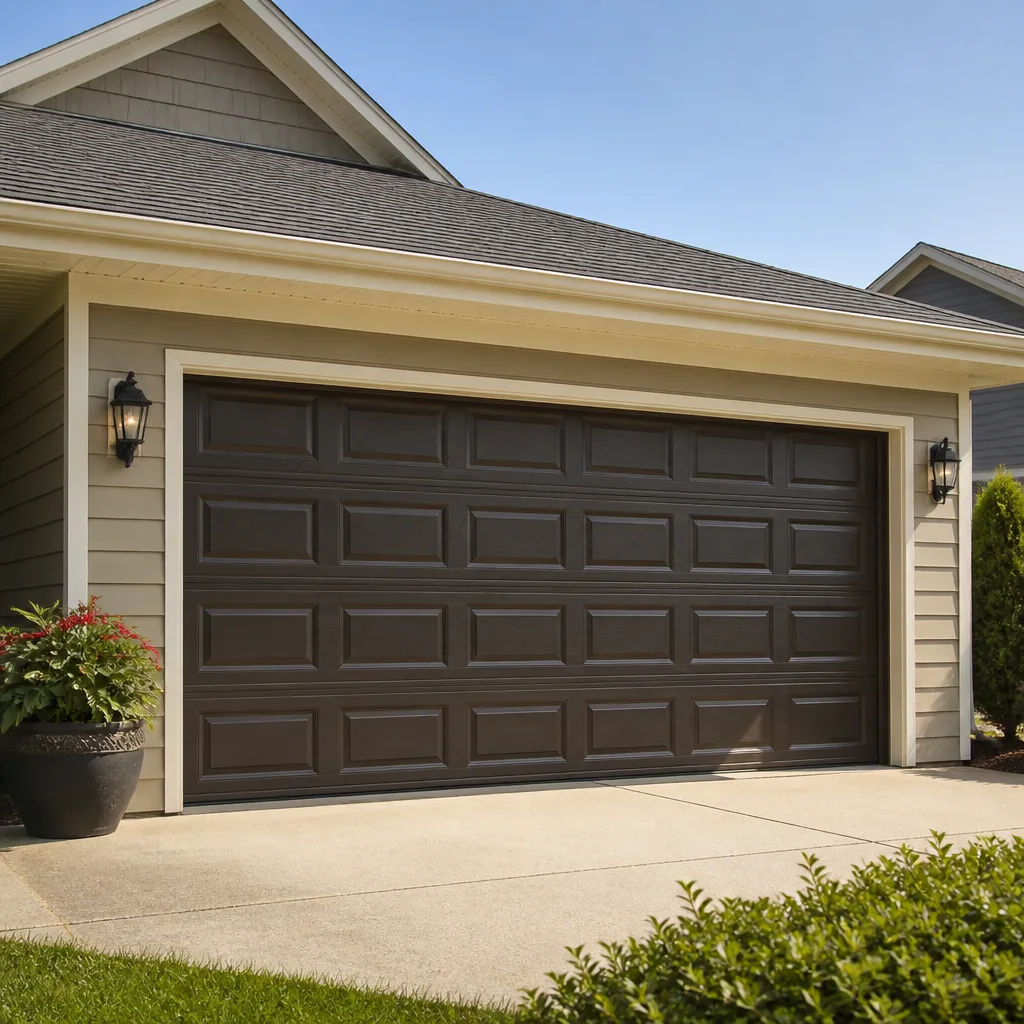 Raised-panel steel
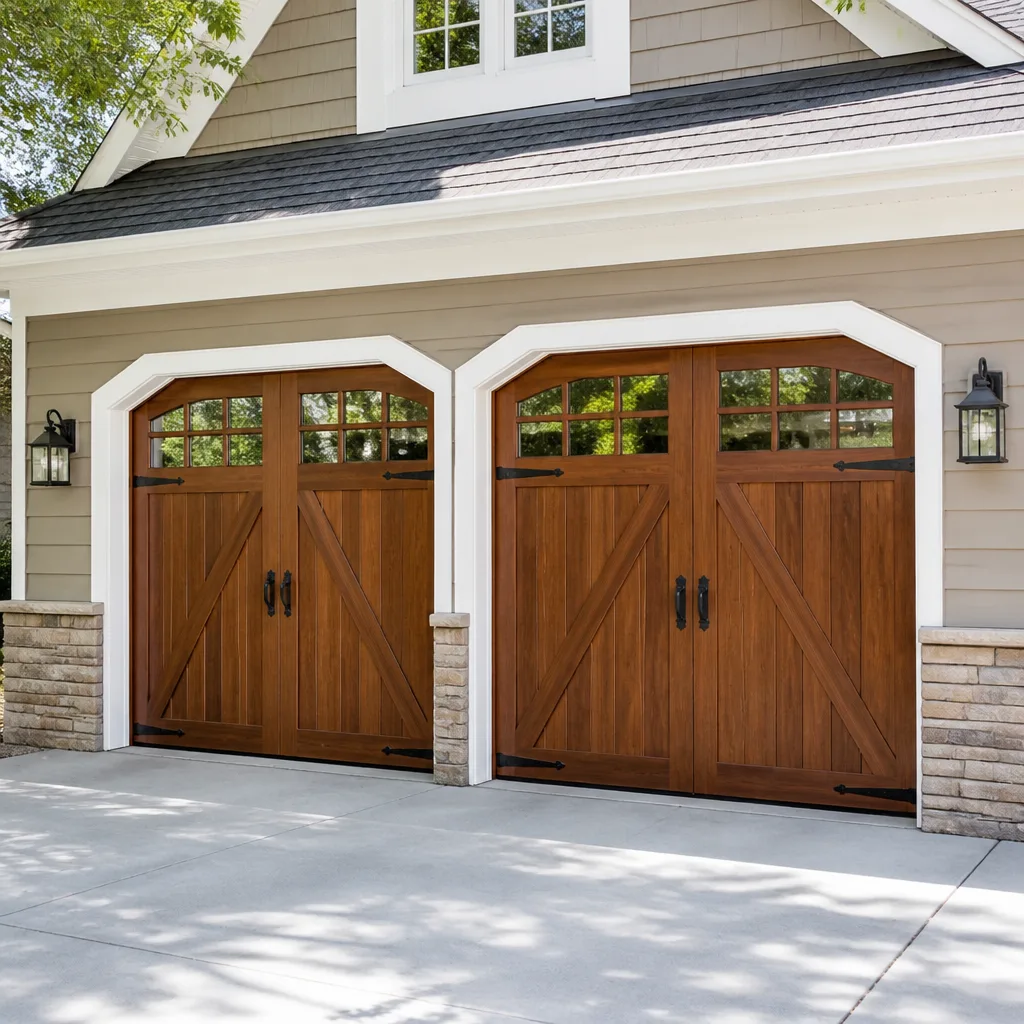 Carriage house
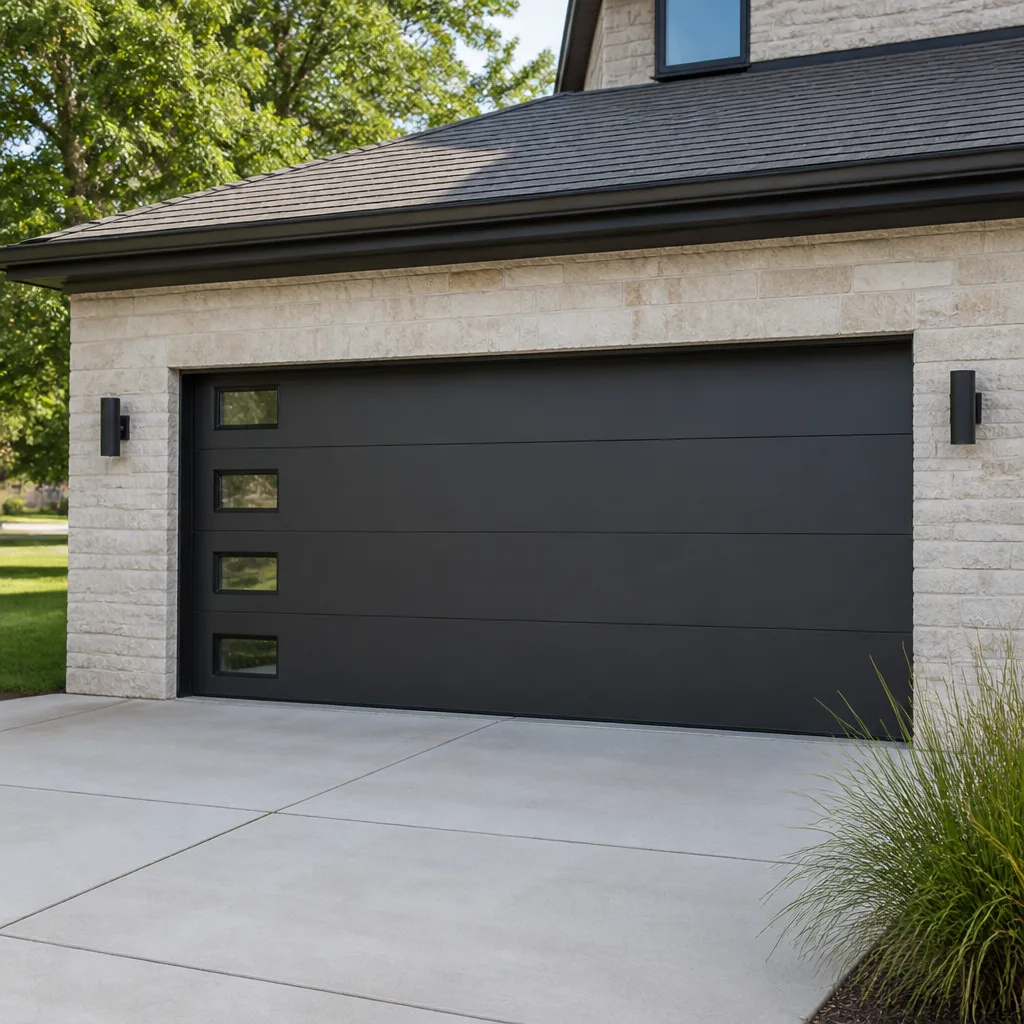 Modern flush
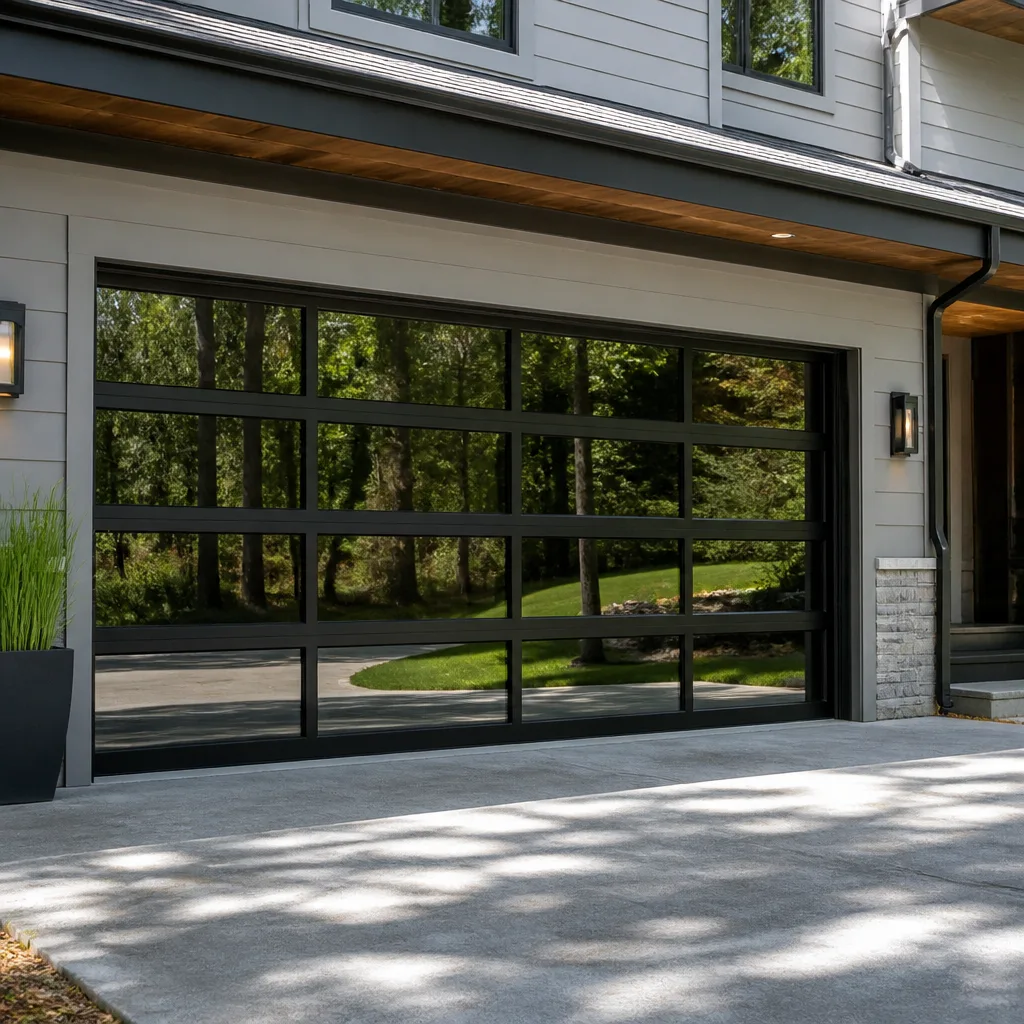 Full-view glass
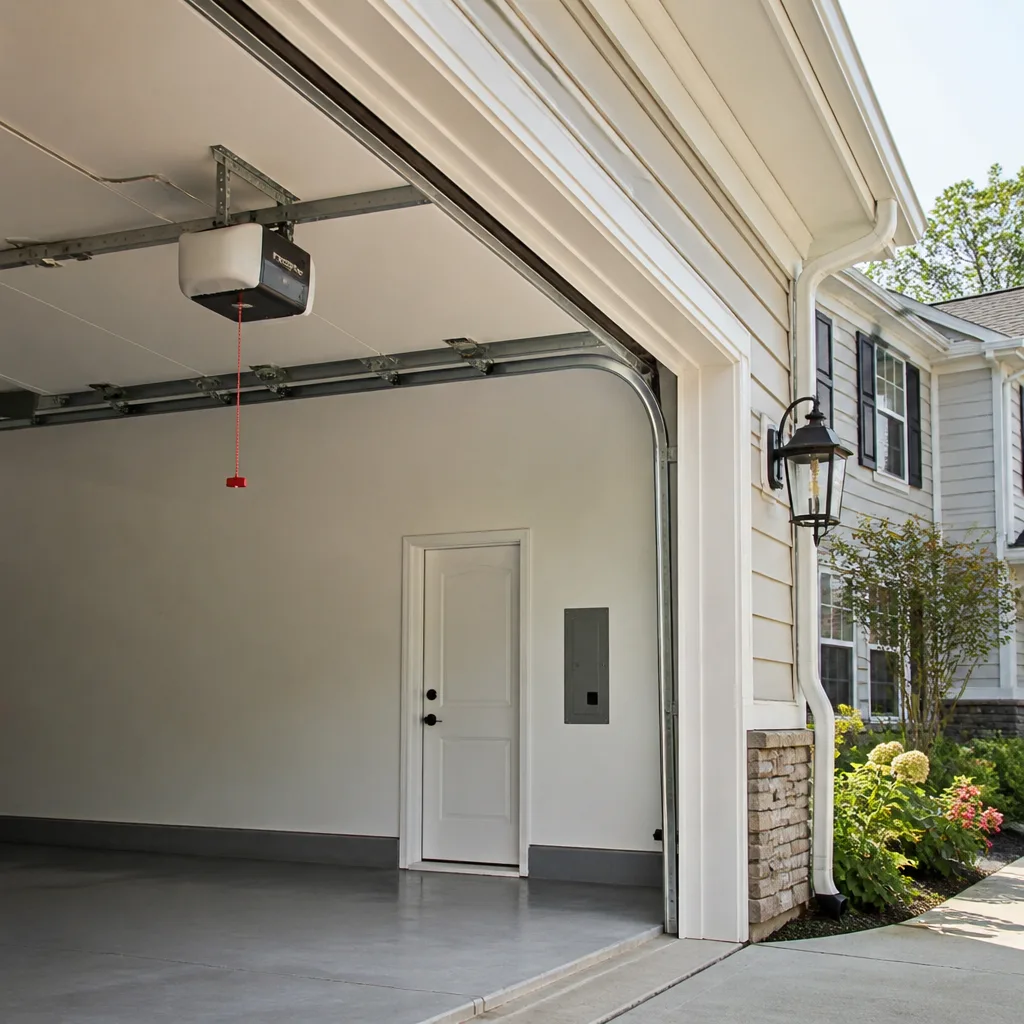 LiftMaster openers
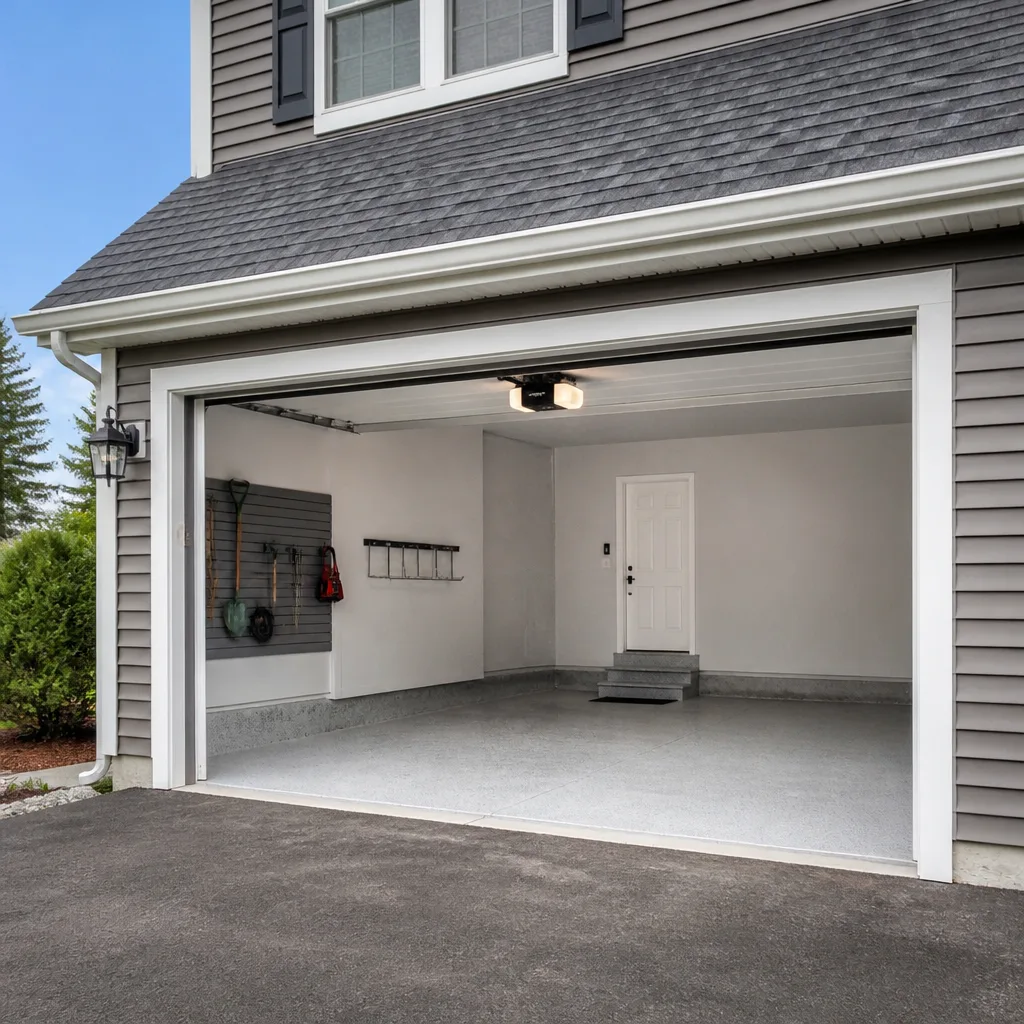 Chamberlain openers
Full 25-point door and opener safety check with every visit - springs, cables, rollers, tracks, and your LiftMaster or Chamberlain opener included
You get a price before we start. It does not change when the pro arrives.
Get your free estimateSeasonal Garage Door Care for Doral: Year-Round Homeowner’s Guide
Most garage door care calendars were written for places that get snow. They tell you to winterize, to clear ice from the bottom seal, to watch for frost heave in the slab. In Doral, none of that applies. What we have instead is a nine-month stretch of heat and humidity followed by hurricane season, and that’s the rhythm your garage door actually lives by. The advice to “winterize” your door is meaningless here, but the month before hurricane season is when the most expensive and most dangerous failures tend to surface, because a spring that’s been quietly losing tension through a summer of thermal cycling doesn’t announce itself until it snaps. This guide reframes seasonal care for South Florida reality: what to inspect before a named storm, what to document after one, and how to keep the hardware alive through the humidity that never really leaves. If you’ve searched for seasonal garage door care in Doral and found nothing but northern advice, this is the guide you were looking for.
Quick Answer
In Doral, seasonal garage door care isn’t about four seasons. It’s about three windows: the dry season (roughly November through April), when you lubricate and realign; the pre-hurricane window in May, when you inspect, test, and document; and post-storm, when you assess damage before you call anyone. Year-round, the constant is humidity management: watching for rust onset on springs, hinges, and fasteners before it becomes a repair. Get those three windows right and your door lasts longer and fails less dangerously.
Styles & brands we work with
- Raised-panel steel
- Carriage house
- Modern flush
- Full-view glass
- LiftMaster openers
- Chamberlain openers
Table of Contents
- Why Doral Doesn’t Have Four Seasons (And Why That Matters)
- The Dry Season Window: November Through April
- The May Pre-Hurricane Checklist
- Wind Rating, Bracing, and What Your Door Already Has
- Post-Storm Inspection Protocol
- Managing Humidity Year-Round
- Using Insurance Renewal as Your Forcing Function
- When Seasonal Care Needs a Technician
Why Doral Doesn’t Have Four Seasons (And Why That Matters)
Doral’s climate is subtropical: warm, humid, and remarkably consistent. There’s no hard freeze to stop the season’s growth, no frost line to design around, no snow load to engineer for. What you get instead is thermal cycling. Metal expands in the afternoon heat and contracts overnight, day after day, for most of the year. A torsion spring, which stores enormous mechanical energy in a coiled steel wire, is doing a tiny version of this cycle with every temperature swing. Over a full summer the wire fatigues. That’s the mechanism that turns a spring from “working fine” to “snapped this morning” with no obvious warning. Hurricane season, which runs roughly June through November, adds the second variable: wind pressure on a door that’s the largest moving opening in your house. Those two forces, heat and wind, are what shape the seasonal calendar in Doral.
The dry season, roughly November through April, is when humidity eases a little and temperatures are milder. That’s your maintenance window because you can work on the door comfortably and observe hardware without rain in the way. The pre-hurricane window in May is the transition point: the last manageable month before storms become a real threat. The rest of the year is reaction: managing humidity, watching the symptoms, and calling when something changes. We’ve seen this cycle repeat enough times in Doral to know the pattern holds. Door owners who work these three windows spend less on repairs and are safer during a storm than those who only call after a failure.
The Dry Season Window: November Through April
The dry season is your maintenance season. Humidity drops enough that lubricants stay where you put them, and temperatures are mild enough to inspect safely. This is when you lubricate, check alignment, tighten fasteners, and look for early signs of wear. A few focused hours in early November can save you a repair in March.
What to do during the dry season:
- Lubricate the moving parts. White lithium grease or a garage-door-specific silicone spray on the hinges, rollers, and torsion spring is enough. Avoid heavy oil that collects dust and grit. Do this once at the start of the dry season and once mid-season if you use the door heavily.
- Check the track alignment. Cooler temperatures cause slight shifts in wood frame and track mounting. Run the door slowly by hand (if your opener allows manual release) and look for binding, wobble, or a door that pulls to one side. A slightly misaligned track will wear the rollers fast.
- Tighten hinges and fasteners. The vibration of daily use loosens bolts. A quick pass with the right wrench prevents wandering hardware.
- Test the balance. Disconnect the opener and lift the door halfway by hand. A properly balanced door stays put. If it drops or rises on its own, the spring tension is off.
- Inspect the bottom seal and weatherstripping. Dry season sun bakes rubber. Look for cracking, gaps, or a seal that’s pulled loose from its channel.
If the balance test fails or you see uneven wear on the rollers, that’s usually the first hint the springs are fatiguing. garage door spring repair is not a homeowner job, so call a technician to assess before it fails under load. A spring that’s off-balance is a spring that’s closer to breaking.
The May Pre-Hurricane Checklist
May is the month that matters most in Doral. It’s the last window before the first named storm, and it’s when most preventable storm damage gets prevented. A door that’s checked, tightened, and tested in May is far more likely to survive a tropical system in August than one that isn’t. This is also when undetected spring fatigue becomes dangerous: a spring that’s been weakening through a summer of thermal cycling may be one gust away from snapping while you’re trying to close the door against wind pressure.
The pre-hurricane checklist, in order:
- Inspect the door panels. Look for cracks, dents, or loose sections. A panel that’s separating is a panel that can fail under wind load.
- Check the hinges and fasteners. Tighten everything. Vibration from a full season of use loosens hardware.
- Test the spring tension and balance. Disconnect the opener, lift the door halfway, and confirm it holds. Any sluggishness or imbalance is a call-now issue, not a wait-and-see issue.
- Lubricate the moving parts one more time. Storm season brings rain and humidity; a fresh coat of lubricant helps.
- Test the safety sensors. Close the door and confirm it reverses when you break the beam. Sensors that fail now will fail in a storm.
- Check the manual release. Ensure the cord works and the door can be lifted by hand if the power goes out.
- Document the door’s current condition. Photograph panels, springs, opener, and seals. This is your baseline for post-storm comparison.
If you’re unsure about any of these, an inspection is worth the call. We’re upfront: we don’t sell “tune-ups” as a package, because every door is different. What we do is inspect, tell you what needs attention, and quote it before anything starts.
Wind Rating, Bracing, and What Your Door Already Has
A garage door is the largest opening in your home’s wind envelope, and in a tropical system it takes the full brunt of pressure. Florida building code has required specific wind ratings for garage doors in high-velocity zones for decades, and Doral falls into a zone where wind-rated doors and bracing are the standard, not the exception. The question isn’t whether your door has a wind rating; it’s whether it’s still performing at that rating after years of use.
What bracing does:
- Horizontal reinforcement stiffens the door panels against wind pressure, preventing them from bowing inward and failing.
- Vertical or corner bracing reinforces the edges where the door meets the frame.
- Proper track anchoring ensures the door stays in its tracks under load.
Bracing should be part of the door’s original specification, not something added later unless a technician evaluates whether it’s appropriate. If you’ve recently bought a home in Doral and don’t know your door’s wind rating, ask a technician to check. It’s a question worth answering before a storm, not after. If the door isn’t rated for the local wind zone, replacement may be the right option, and we install new doors with the correct rating for your area. You can read more about garage door repair versus replacement on our service page.
Post-Storm Inspection Protocol
After a tropical system passes, the safest step is to inspect before you operate the door. Storm damage can be hidden: a slightly bent track, a spring that took a hit from debris, a roller that came off its shaft. Operating a damaged door can turn a fixable problem into a hazardous one.
What to do after a storm:
- Look at the door from the outside first. Check for panels that are bent, separated, or missing. Never stand under a door that looks compromised.
- Inspect the tracks. Look for dents, bends, or debris that’s blocked the channel. A track that’s bent needs professional straightening or replacement.
- Check the springs and cables. Look for obvious breaks or fraying. If you’re not sure, don’t touch. Springs are under extreme tension.
- Test the door manually if it looks intact. Disconnect the opener and lift the door slowly. If it binds, stop and call.
- Document everything. Photograph any damage before you clean up or call anyone. Insurance claims need evidence.
- Call a technician for any questionable finding. A door that “looks fine” can still have a compromised spring or a shifted track.
For insurance, document everything: date, time, storm name, and a photo of each affected part. Keep receipts for any emergency measures. If the door was damaged and won’t close, we can help assess and repair, and we can work with your insurer on the scope. What we don’t do is tell you it’s fine when it isn’t. A hidden spring failure is dangerous.
Managing Humidity Year-Round
Humidity is the constant in Doral. Even in the dry season, the air is wet enough to support rust on bare steel. The good news is that rust onset is easy to spot early if you know where to look. The bad news is that most homeowners don’t look until the hinge is seized.
Where rust starts first:
- Torsion springs. Look for orange flecking or a dull finish on the coils. A rusted spring is a fatigued spring.
- Hinges and rollers. Any stiffness or visible rust means the lubricant has worn off.
- Fasteners and brackets. Rust on a bolt head is a sign the finish has failed.
- The bottom seal and frame contact points. Water pools and sits there.
How to slow it down:
- Use a garage-door-specific lubricant, not cooking oil or WD-40 as a substitute. A real lithium or silicone garage-door grease stays put and blocks moisture.
- Wipe down the track with a dry cloth periodically to remove grit that traps moisture.
- Keep the garage interior ventilated when possible. A dehumidifier helps in closed garages, especially in the wet season.
- If you’re choosing a new door, ask about hardware grades. Galvanized or stainless fasteners and powder-coated components hold up better in Doral’s humidity than bare steel.
We see a lot of seized hinges that could have been avoided with a twice-a-year wipe and lubricant. It’s the cheapest maintenance you can do. If you’re not sure what grade your hardware is or whether it’s holding up, an inspection tells you fast.
Using Insurance Renewal as Your Forcing Function
The single best trigger for a full garage door inspection in Doral is your annual homeowner’s insurance renewal. Insurers increasingly care about wind-rated openings and documented condition, and the renewal conversation is a natural moment to have a technician look at the whole door. It also forces a yearly baseline, so you know what changed.
What a renewal-timed inspection should cover:
- Spring condition and balance
- Cable condition and attachment points
- Track alignment
- Hinge and fastener tightness
- Opener function and sensor test
- Panel condition and seal integrity
- Wind rating verification (if documented on the door label)
If your insurer asks for wind mitigation details, an inspection report from a technician is useful documentation. What we can’t do is promise your premium will drop; that’s between you and your insurer. What we can do is give you an accurate picture of the door’s condition so you’re not guessing at renewal time.
One more point: don’t wait until the renewal notice to think about the door. The inspection takes less time than the paperwork. Book it for the same month your policy renews and you’ll never miss a year. Our garage door opener repair team handles the opener side of the inspection; if the drive or sensors are the issue, that’s our specialty.
When Seasonal Care Needs a Technician
Most seasonal care is homeowner-safe: lubricating, tightening, visual inspection, and testing sensors. A few things are not. Anything involving torsion springs, cables, or track realignment should be handled by a trained technician. Springs store enough energy to cause serious injury, and a failed spring can whip a cable with force. We don’t recommend DIY on those parts. Beyond the hazardous work, there are specific scenarios where a call is warranted:
- A door that’s off-balance or won’t hold halfway.
- Springs that look rusted, kinked, or uneven.
- Tracks that are bent or a door that’s jumped its track.
- An opener that won’t respond despite power, or safety sensors that won’t stop reversing.
- Post-storm damage of any kind.
- An older door you’ve never had inspected and can’t confirm the wind rating.
Doral Garage Door Repair Co offers free estimates in Doral. Our technicians have up to 13 years of experience and are familiar with the major brands you’ll find in local homes, including LiftMaster, Chamberlain, Genie, Clopay, Amarr, Wayne Dalton, Craftsman, and Raynor. If you’re not sure whether you need a repair or a whole new door, we’ll tell you straight. Call (866) 937-8410 to schedule. Our technicians have up to 13 years of experience; the phone line is the fastest way to a quote.
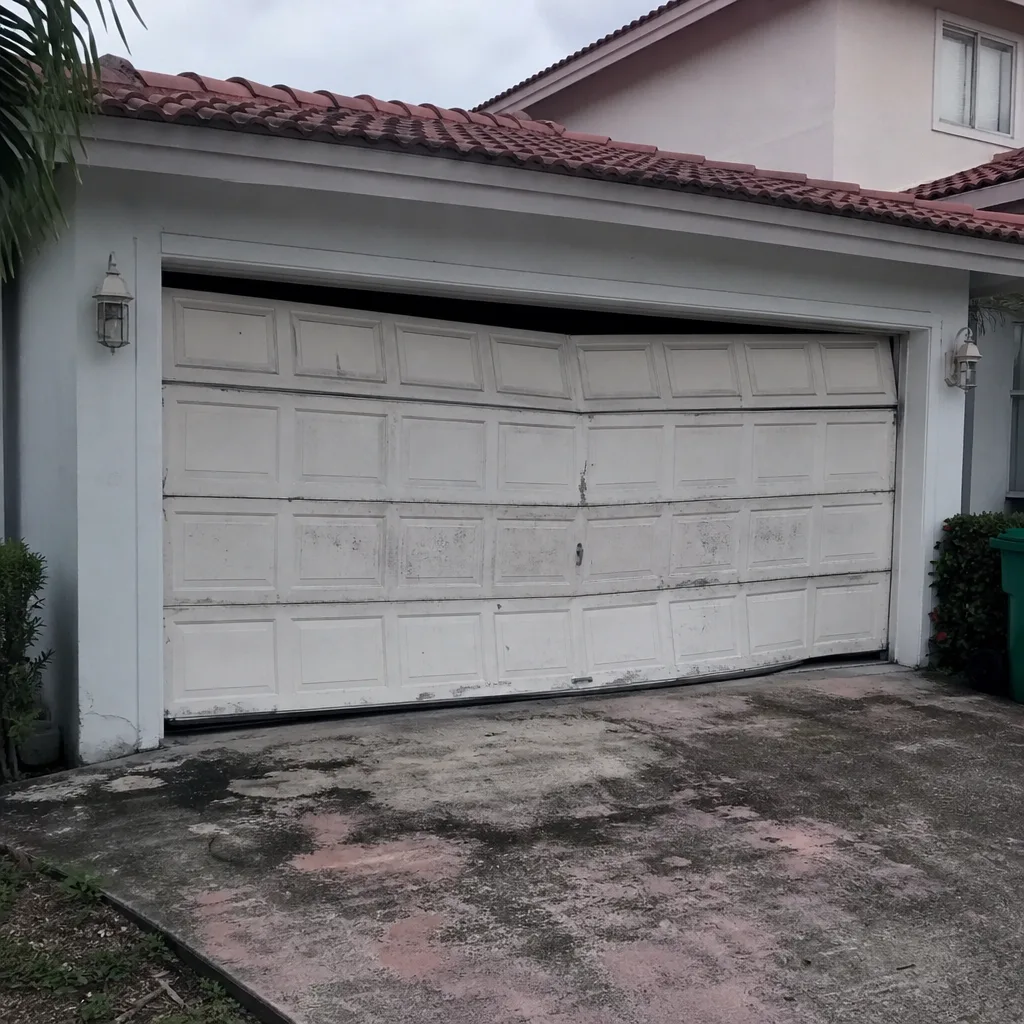
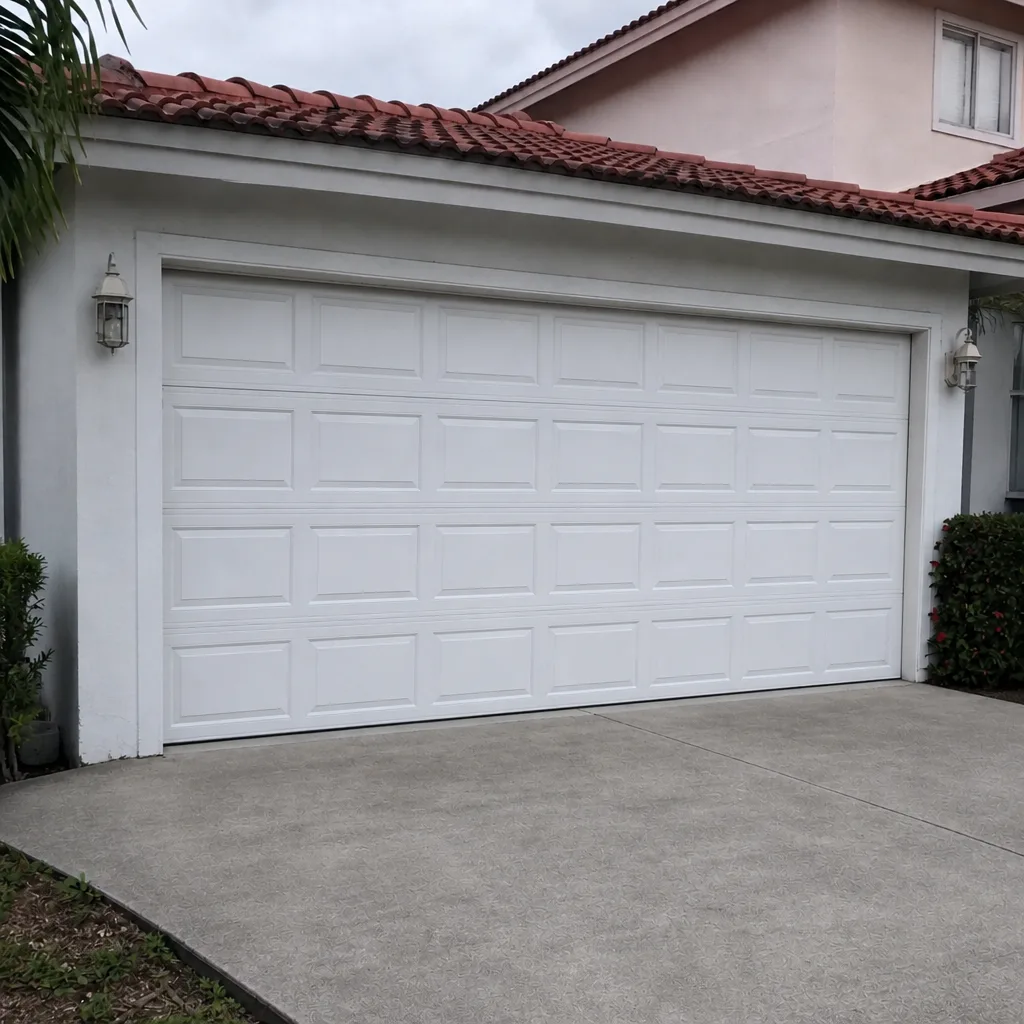
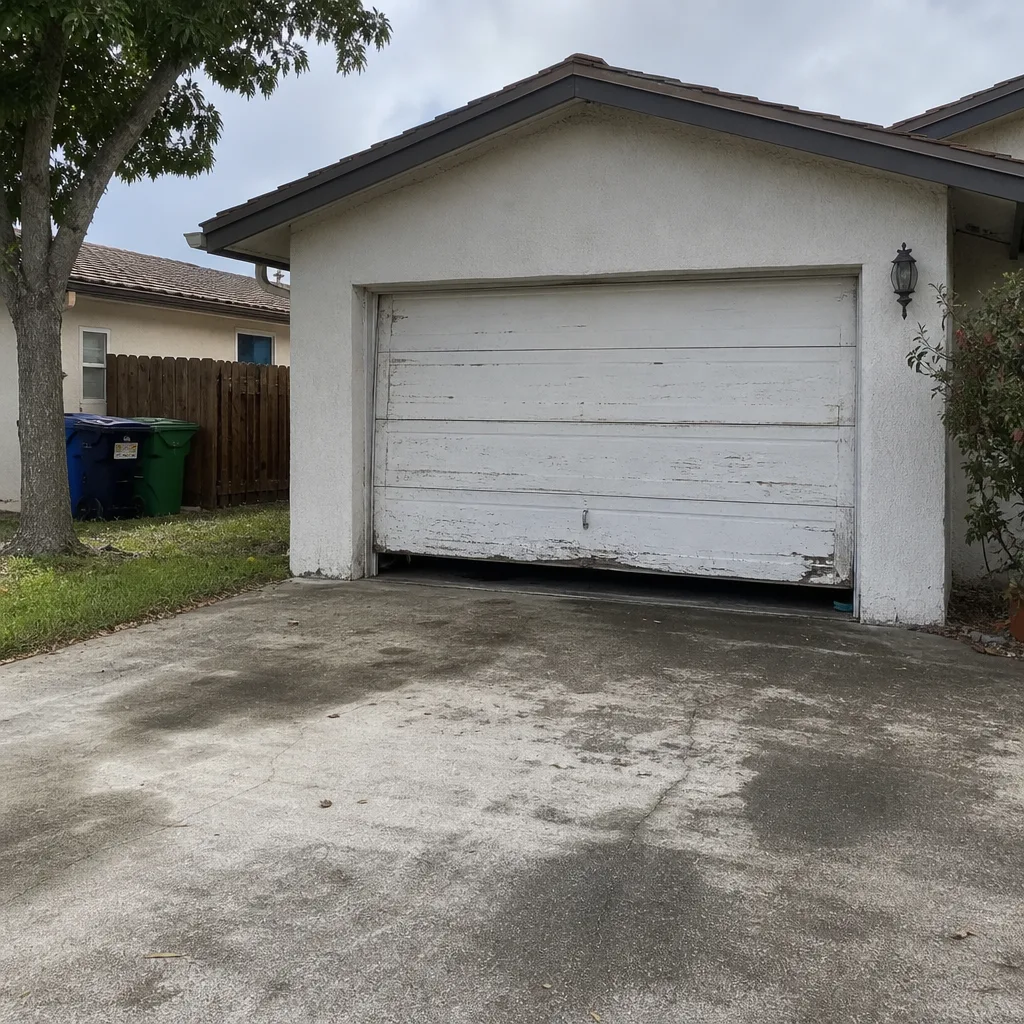
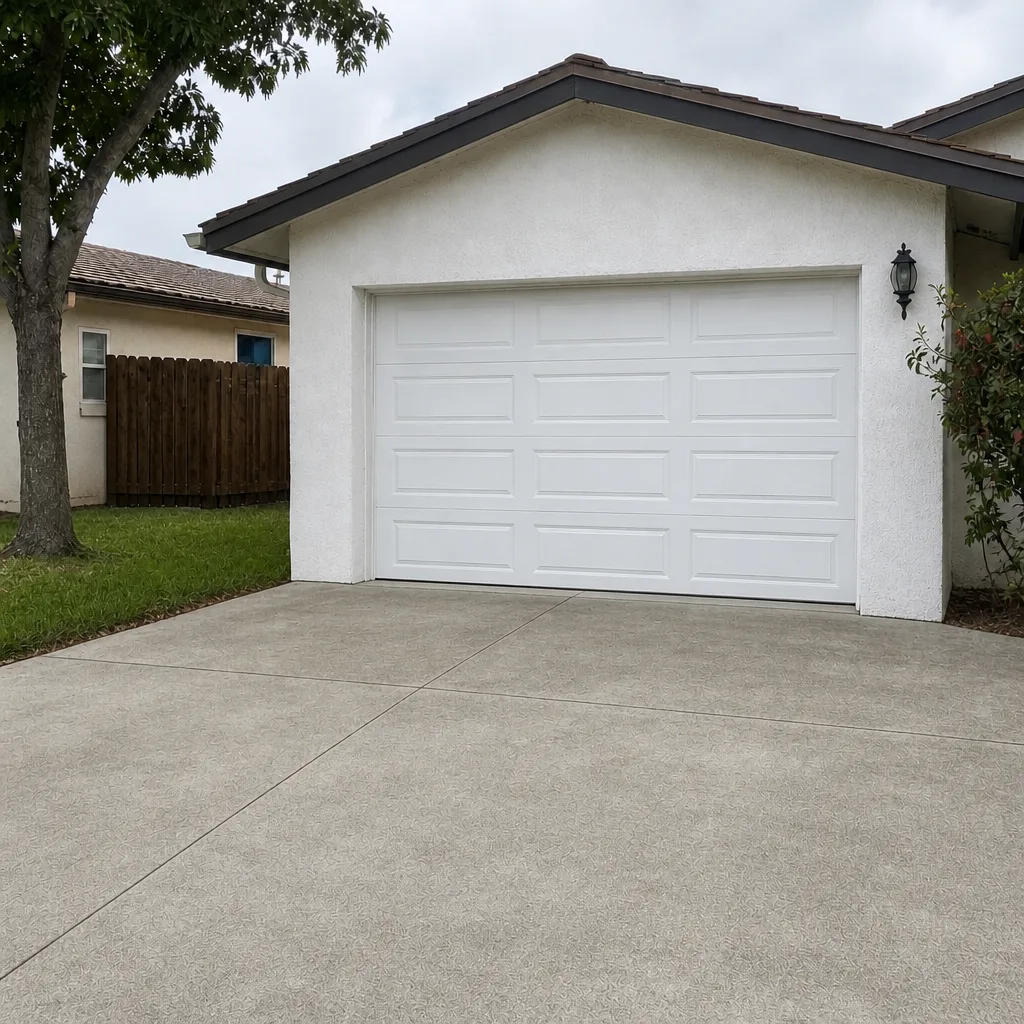
See the difference
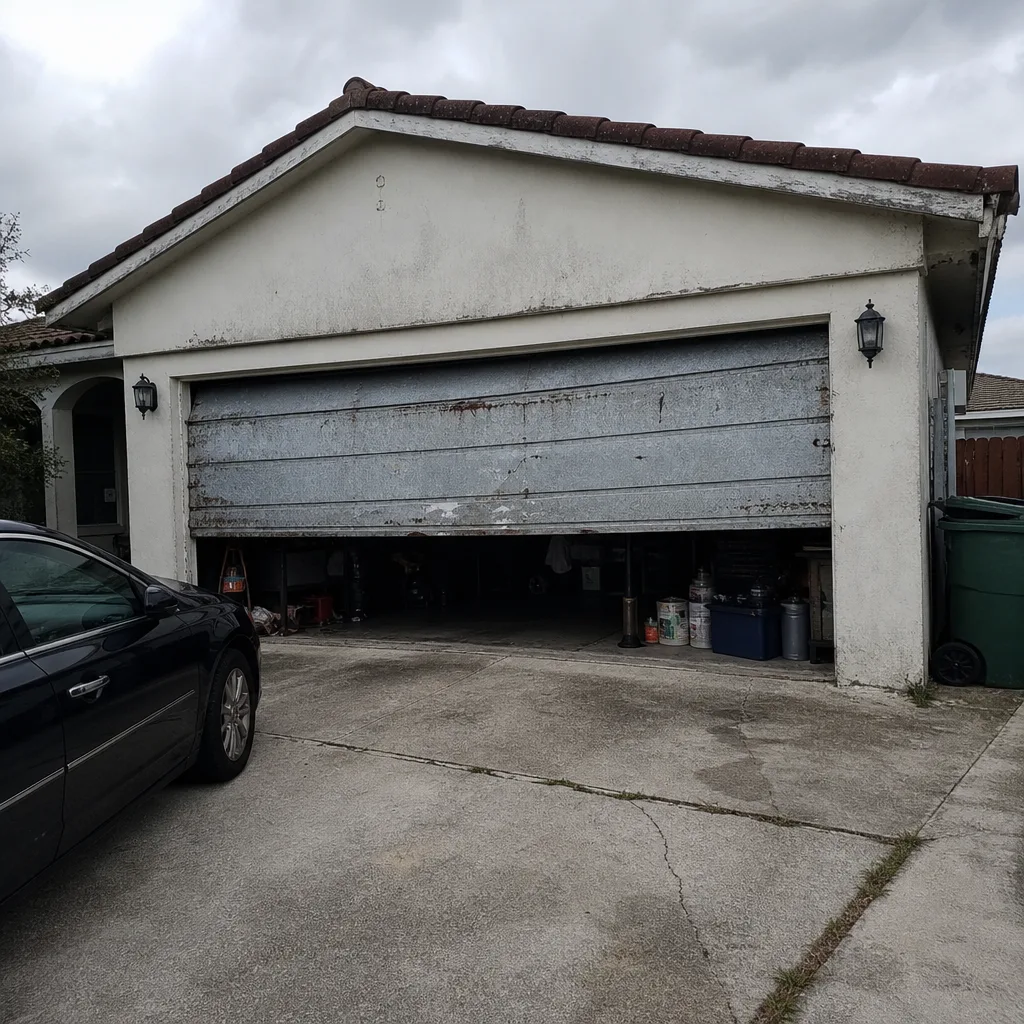 Before
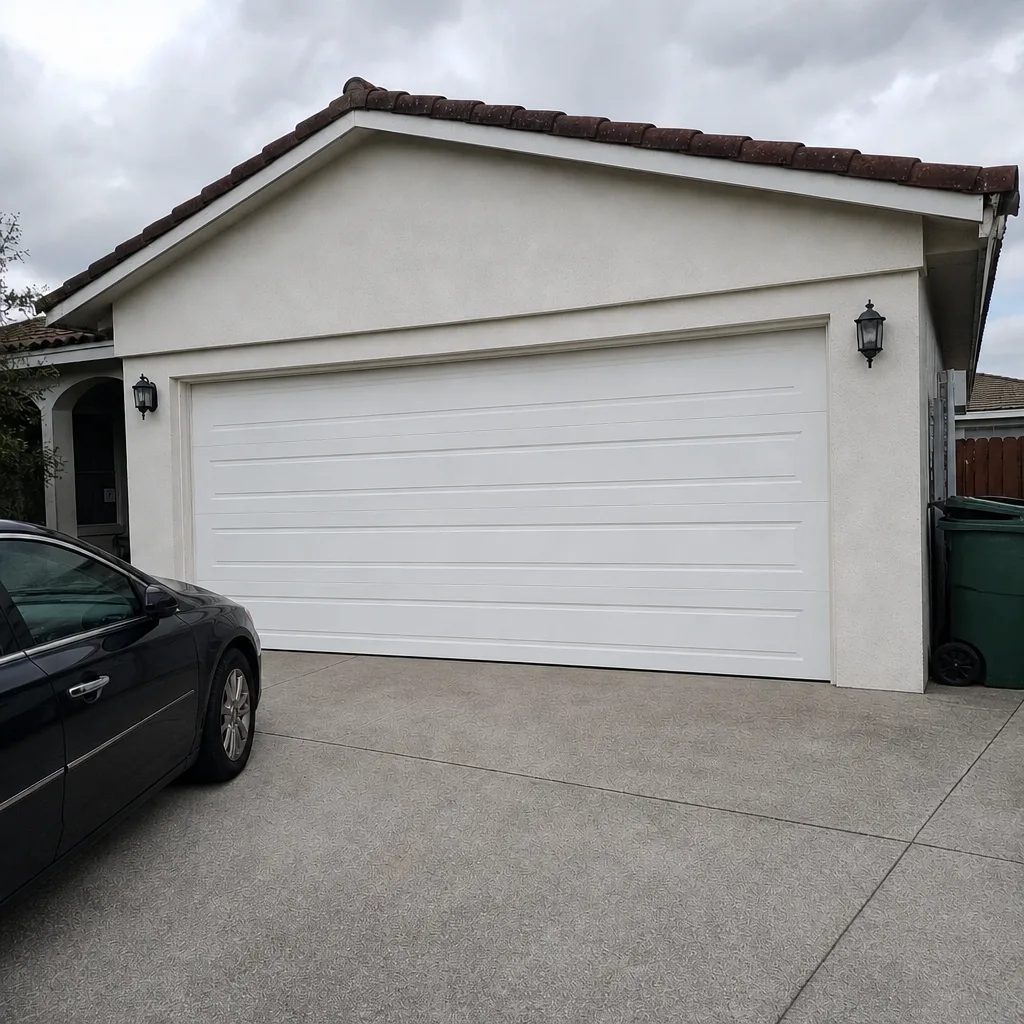 After
 Before
 After
 Before
 After
Common Mistakes to Avoid
- Treating winter advice as relevant. Doral doesn’t freeze, so winterizing is wasted effort. Focus on hurricane season and humidity instead.
- Ignoring spring symptoms until failure. A spring that’s off-balance or holds the door unevenly is close to breaking. Address it before a storm, not during one.
- DIY on torsion springs or cables. This is the most dangerous part of the system. Professional tools and training are required.
- Not documenting before a storm. Without a baseline photo, you can’t prove what was pre-existing damage versus storm damage for insurance.
- Skipping the post-storm inspection. A door that looks fine can have a bent track or a weakened spring. Inspect before operating.
- Using the wrong lubricant. WD-40 evaporates and doesn’t protect. Use a garage-door-specific lithium or silicone lubricant.
- Assuming the wind rating still applies. A door rated for wind is only as good as its current condition. Inspect and verify.
Frequently Asked Questions
For most Doral homeowners, the best time is late April or early May, right before hurricane season. That gives you a full maintenance cycle before the first storm and lets you address any spring, track, or hardware issues when weather is still workable. A secondary window in November, at the start of the dry season, catches anything that developed over the summer.
No. Doral doesn’t get freezing temperatures, so winterizing steps like antifreeze, ice prevention, or frost checks don’t apply. What matters here is humidity management and hurricane prep. Substituting the northern winter routine for the pre-storm checklist is the most common seasonal mistake we see.
Inspect the door from the outside before you operate it. Look for bent panels, separated sections, or debris in the tracks. If anything looks off, don’t run the opener; call a technician. Springs and cables can be compromised invisibly, and operating a damaged door can turn a fixable issue into a hazardous one.
No. Bracing has to match the door’s structure, weight, and wind rating, and the wrong installation can reduce performance or create a new failure point. A technician evaluates what’s appropriate. If your door already has a wind rating, the question is usually whether it’s still intact, not whether you need to add bracing. Call (866) 937-8410 for a free estimate if you’re unsure.
Twice a year is the practical minimum, ideally once at the start of the dry season and once before storm season. In a heavily used door, every three to four months. Look for signs the lubricant has dried or rust is starting on hinges or springs. A quick wipe and re-lubricant takes minutes and prevents seized hinges.
Yes, often. A technician checks components homeowners don’t typically examine closely, like spring fatigue, cable condition, and track alignment. Even if your insurer doesn’t require it, timing an inspection to your renewal gives you a yearly baseline. If you’ve had a door for years without inspection, this is the year to start. Call (866) 937-8410; estimates are free.
The Bottom Line
Doral doesn’t have four seasons. It has dry season, pre-hurricane season, post-storm, and a long humid middle. Care for your garage door around those windows and you’ll catch problems before they fail: lubricate and align in the dry season, inspect and document in May, and assess before operating after any storm. Track humidity year-round, and use insurance renewal as a yearly inspection trigger. If you’re not sure where to start, that’s exactly what a scheduled inspection is for. For seasonal garage door care in Doral, or emergency help when the door won’t move, call (866) 937-8410. For a full picture of what we do, start with Doral Garage Door Repair Co.
Written by the team at Doral Garage Door Repair Co.